
 Print
PrintTokenized Treasuries hit $15 billion as bitcoin stalls, Fed rate-rise concerns build
BY Coindesk | TREASURY | 05/13/26 07:51 AM EDTThis is an excerpt from CoinDesk newsletter 'Daybook.' Sign up here, if you haven't already.
While bitcoin (BTC) remains pinned above $80,000, another interest rate-sensitive corner of the crypto market is booming and may suck capital out of other coins.
The total value locked in tokenized Treasuries has surged to $15.35 billion, topping the mid-April peak of around $15.10 billion, according to rwa.xyz data.
This comes as markets price in a higher probability of a Federal Reserve interest-rate hike (yes, an increase in borrowing costs), a stark shift from expectations for rapid rate cuts baked in earlier this year.
"The June cut just got significantly harder to defend, and the allocator positioning we flagged - capital sat in [BlackRock's
Flows into yield-bearing tokenized Treasuries could rise further if today's U.S. producer price index (PPI) points to persistent inflationary pressures in the pipeline. Consensus is for the April print to come in at 4.9% year-on-year, up from 4.0% in March.
An elevated reading would add to Fed rate-hike expectations and pose a headwind to risk assets. How bitcoin reacts remains to be seen, especially as it held largely steady above $80,000 after Tuesday's hotter-than-expected CPI print.
While noting BTC's resilience, analysts at Marex
"That is the constraint for crypto: it can hold, but it will struggle to trend higher if real [inflation] rates keep grinding up," analysts at Marex
Miners, too, present a potential headwind.
"If large miners are reporting big losses and pivoting toward AI, it usually means they may need to manage balance sheets more actively, which can translate into more spot supply on rallies. That is not a crash trigger, but it can cap upside in a choppy macro tape," they noted.
In the broader market, smaller coins such as ING, DOT, ATOM and TRUMP added 5% or more, pointing to a rotation of capital into selective tokens. Majors like ether (ETH), solana (SOL), and XRP remain choppy.
Bitcoin and ether volatility indexes continue to point to near-term calm ahead of three major events: the PPI report, the Clartiy Act vote and the meeting between President Donald Trump and his Chinese counterpart, Xi Jingping.
In traditional markets, WTI crude oil futures bounced back above $100, while copper rose to near-record highs, both pointing to more commodity-led inflation ahead. Stay alert!
Read more: For analysis of today's activity in altcoins and derivatives, see Crypto Markets Today . For a comprehensive list of events this week, see CoinDesk's "Crypto Week Ahead."
What?s trending
- JPMorgan
(JPM) files to launch new tokenized fund as Wall Street tokenization race heats up (CoinDesk): JPMorgan(JPM) prepares tokenized money market fund roll-out, the latest sign that Wall Street is speeding up efforts to move traditional assets onto blockchain rails. - Senate confirms Kevin Warsh to Fed board ahead of expected Chair vote (CoinDesk): The Senate confirmed Kevin Warsh to the Federal Reserve Board in a 51-45 vote. He faces a separate Senate vote to become Fed chair as Jerome Powell?s eight-year term ends Friday.
- Trump heads to China, says no need for Xi's help on Iran war (Reuters): Trump headed to China for a high-stakes summit with ?Xi Jinping, saying he does not expect to need Beijing's help to end the war with Iran and ease Tehran's grip on the Strait ?of Hormuz.
Today?s signal
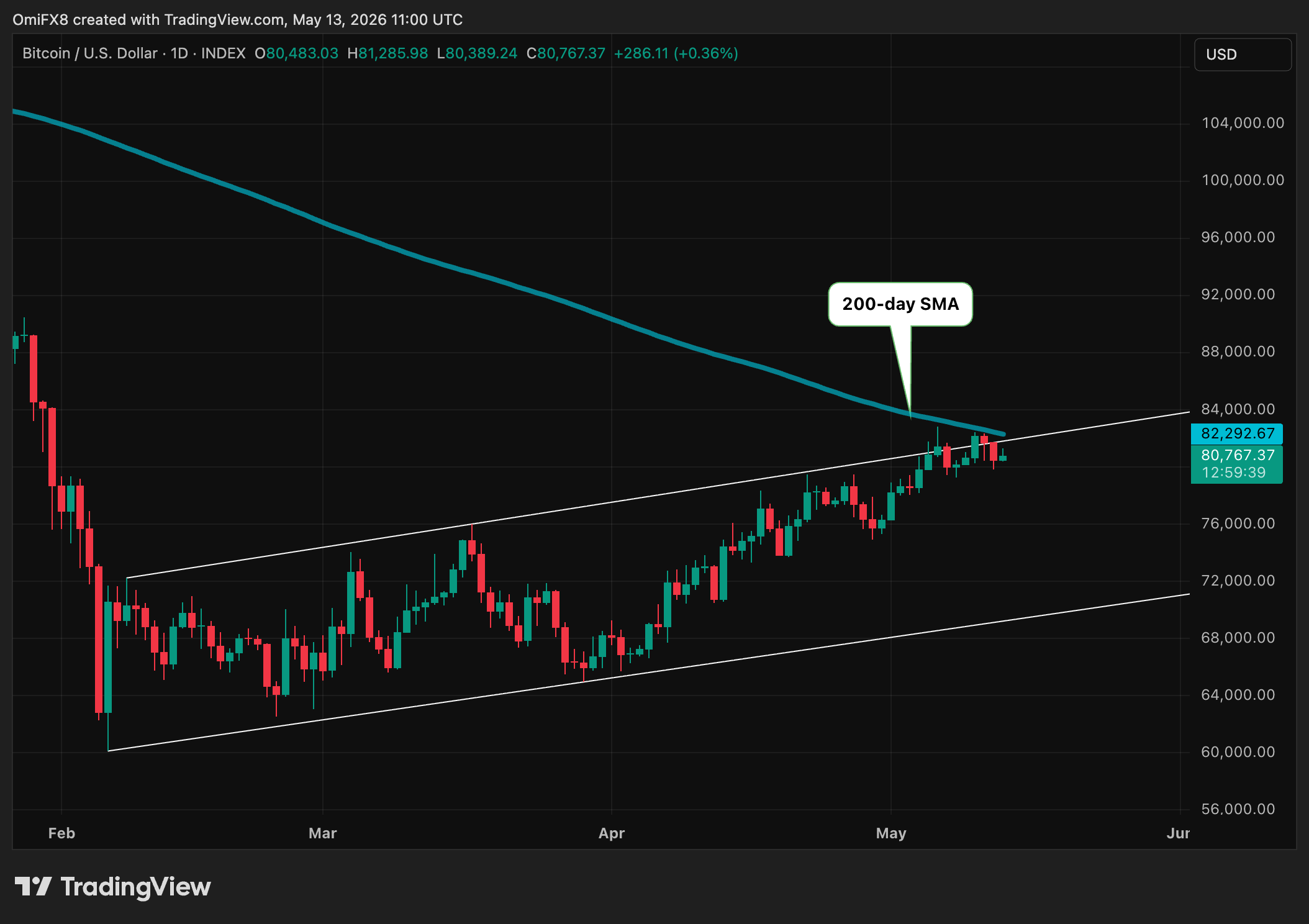
Bitcoin (BTC) appears to be at an inflection point, with the recovery from February lows stalling near the 200-day simple moving average (SMA) at around $82,300 and the upper boundary of a rising channel.
The momentum has stalled just as macro uncertainty around inflation and Federal Reserve policy intensifies.
A bearish resolution would involve BTC failing to break above the 200-day average and slipping below $75,000, which was widely cited as a key level in February-March. That could encourage systematic sellers back to the market, particularly if rising Treasury yields continue to tighten financial conditions and weigh on risk appetite.
On the bullish side, a decisive move above the 200-day average would confirm a bull market, potentially yielding a rally to as high as $92,000.
CORRECTION (May 13, 7:07pm ET): Updates Iggy Ioppe's title.

