
 Print
PrintHere's How Much Bitcoin, XRP, Ether, Solana May Move on Friday's Inflation Report
BY Coindesk | TREASURY | 12/04/25 11:00 PM ESTThe Fed's preferred inflation gauge, core PCE, likely rose in September?moving in the wrong direction. Yet volatility indices show no signs of major turbulence.
The core PCE likely rose 2.9% year-on-year in September, heading in the wrong direction from the Fed's goal of a 2% annual rate, according to FactSet. If the actual figure matches estimates, it would mark 55 straight months of inflation above the Fed's 2% target. The sticky inflation would strengthen the Fed hawks, who are in favor of slower rate cuts.
Still, as of writing, Volmex's annualized one-day bitcoin implied volatility index , BVIV, hovered in familiar ranges around 36%, according to data source TradingView. That equates to a 24-hour expected price swing of 1.88%, which is nothing out of ordinary.
Low volatility expectations likely stem from anticipated Fed rate cuts next week regardless of PCE data. CME's FedWatch tool prices a 25 basis point cut on Dec. 10 as a done deal.
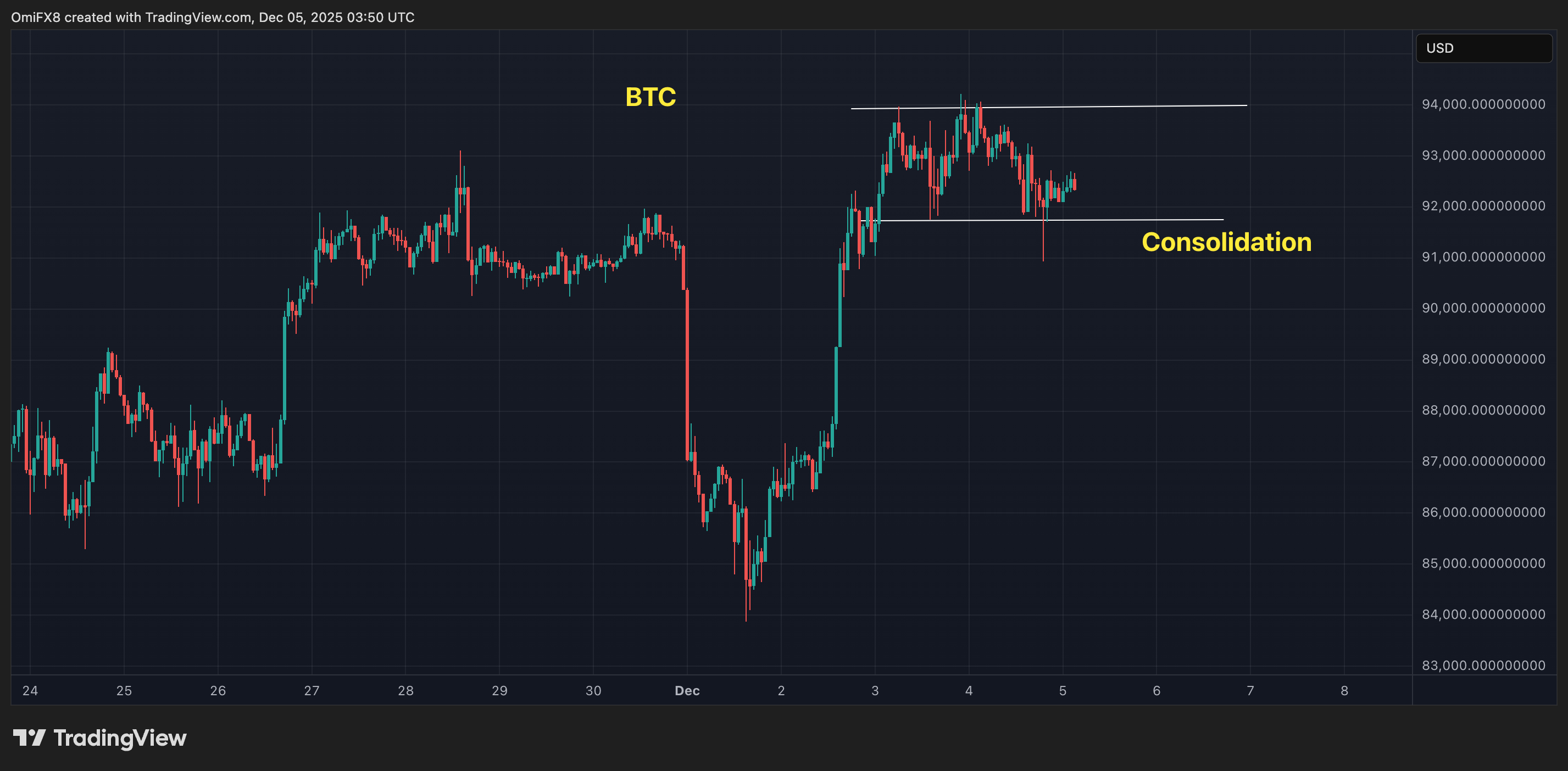
A softer-than-expected report could send the 10-year Treasury yield below 4%, helping BTC break out its two-day trading range of $92,000-$94,000.
"A softer labor read and contained PCE would reinforce the easing narrative supporting crypto?s rebound, while any upside surprise may keep markets range-bound until the Fed clarifies its path," Iliya Kalchev, Nexo Dispatch analyst, said in an email.
Analysts at ING, however, have warned that any decline in the benchmark yield could be short-lived.
The data could have similar impact on alternative cryptocurrencies.
Speaking of ether, it's one-day implied volatility index was 57.23%, implying a 24-hour price swing of 3%, slightly higher than bitcoin. Meanwhile, SOL's volatility index signals a 3.86% price move, with XRP at 4.3%.

