
 Print
PrintBitcoin Could Bounce From 50% Crash ? Here's What Record Layoffs Just Changed
BY Benzinga | ECONOMIC | 02/06/26 10:12 AM ESTBitcoin (CRYPTO: BTC) surged 6% as U.S. planned layoffs more than tripled in January to their highest level since 2009, raising hopes the Federal Reserve will cut rates to support the economy and put a floor under risk assets down nearly 50% from highs.
The Layoff Surge
U.S. companies announced plans to cut 108,435 jobs in January ? a 205% surge from the prior month and a 17-year high, according to outplacement firm Challenger, Gray & Christmas.?
Year-over-year, announced cuts rose 118%, signaling sharp labor market weakening.
The technology sector led the pain. Amazon.com Inc
Andy Challenger called it a high figure for January, noting most plans were set at the end of 2025, signaling employers are pessimistic about 2026.
This clashes with official data. The Bureau of Labor Statistics’ monthly payrolls report still paints a resilient labor market picture, but private reports are becoming early warning flags signaling cracks before official figures reflect them.
The Fed Rate Cut Argument
Private indicators suggest the Fed may soon need to ease policy by cutting rates to support the economy.
Earlier this month, blockchain-based Truflation showed real-time inflation dropping below 1%, even as official CPI lingers well above the Fed’s 2% target.
Together, these signals suggest weakening growth and disinflation that could push the Federal Reserve toward rate cuts.
The potential easing could benefit Bitcoin, which trades down nearly 50% from its record high above $126,000.
Fed expectations are deeply divided. JPMorgan Chase & Co
Other banks expect at least two 25-basis-point cuts this year. One economist predicts Trump’s Fed chair nominee Kevin Warsh will cut rates by 100 basis points before the November midterm elections.
BTC Price Outlook
<figure class="wp-block-image size-large">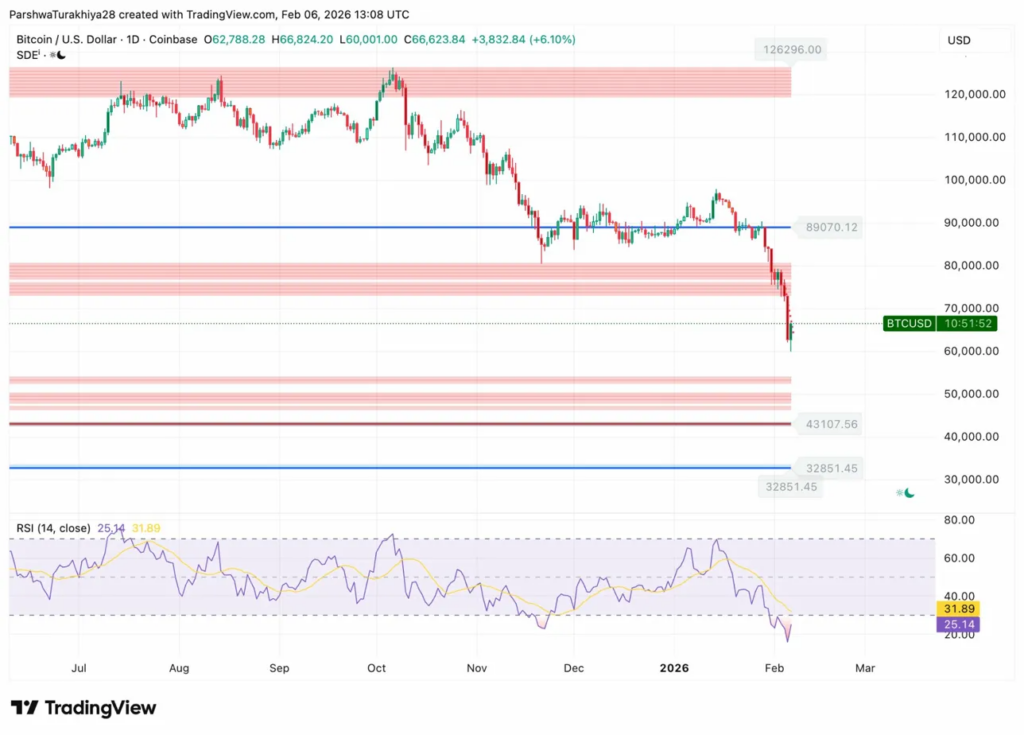 </figure>
Bitcoin is up 6%, bouncing from extreme oversold conditions after testing $60,000-$62,000 support.
However, the recovery occurs from severe technical damage.
Critical resistance sits at $75,000-$80,000 ? the area Bitcoin broke down from during the recent collapse.?
This zone flipped from support to resistance and represents a major hurdle. Above that, $89,070 marks another significant resistance.
The RSI at 25.14 shows Bitcoin bouncing from deeply oversold territory, explaining the current relief rally.
However, RSI remains well below the 50 midpoint, indicating momentum stays bearish overall.
Support levels appear at $50,000-$55,000 if the bounce fails, followed by $43,000 as the critical floor. The ultimate support sits at $32,851?a catastrophic scenario if tested.
Image source: Shutterstock

