PayPal Stock Jumps As Powell's Dovish Tone Sparks Growth Rally

BY Benzinga | ECONOMIC | 08/22/25 03:42 PM EDT

PayPal Holdings Inc (PYPL) shares are surging Friday after Federal Reserve Chair Jerome Powell struck a surprisingly dovish tone at Jackson Hole, signaling that rate cuts may soon be on the horizon as the labor market cools.

What To Know: For growth companies like PayPal (PYPL), interest rates play a pivotal role. As borrowing costs fall, investors are more willing to pay higher valuations for future earnings, since those cash flows are discounted at a lower rate.

Powell's warning that "downside risks to employment are rising" and acknowledgment that "policy may warrant adjusting" marked a clear pivot away from last year's inflation fight toward supporting growth.

This shift directly benefits PayPal (PYPL), which relies on consumer spending and transaction volume growth across its digital payments network. With GDP growth slowing and household budgets under pressure, lower rates could help stabilize consumer confidence and spending. That translates into higher payment volumes and stronger engagement on PayPal's (PYPL) platform.
<figure class="wp-block-image size-large"></figure>

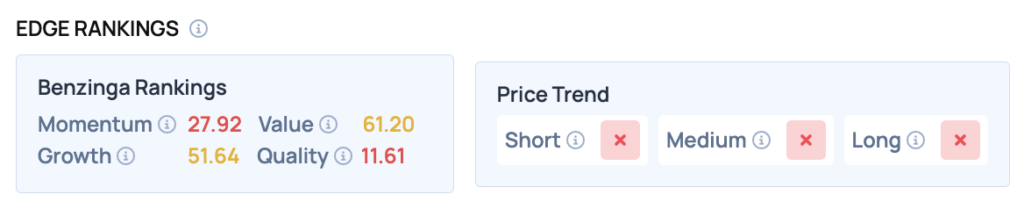
Price Action: According to data from?Benzinga Pro, PYPL shares are trading by 3.38% to $69.83 Friday afternoon. The stock has a 52-week high of $93.64 and a 52-week low of $55.85.

Read Also: Affirm Rises As Google Pay Partnership Brings Flexible Payments To More Online Checkouts

How To Buy PYPL Stock

By now you're likely curious about how to participate in the market for PayPal (PYPL) – be it to purchase shares, or even attempt to bet against the company.

Buying shares is typically done through a brokerage account. You can find a list of possible trading platforms here. Many will allow you to buy “fractional shares,” which allows you to own portions of stock without buying an entire share.

If you're looking to bet against a company, the process is more complex. You'll need access to an options trading platform, or a broker who will allow you to “go short” a share of stock by lending you the shares to sell. The process of shorting a stock can be found at this resource. Otherwise, if your broker allows you to trade options, you can either buy a put option, or sell a call option at a strike price above where shares are currently trading – either way it allows you to profit off of the share price decline.

Image: Shutterstock

In general the bond market is volatile, and fixed income securities carry interest rate risk. (As interest rates rise, bond prices usually fall, and vice versa. This effect is usually more pronounced for longer-term securities.) Fixed income securities also carry inflation risk and credit and default risks for both issuers and counterparties. Unlike individual bonds, most bond funds do not have a maturity date, so avoiding losses caused by price volatility by holding them until maturity is not possible.

Lower-quality debt securities generally offer higher yields, but also involve greater risk of default or price changes due to potential changes in the credit quality of the issuer. Any fixed income security sold or redeemed prior to maturity may be subject to loss.

Before investing, consider the funds' investment objectives, risks, charges, and expenses. Contact Fidelity for a prospectus or, if available, a summary prospectus containing this information. Read it carefully.

fir_news_article
