
 Print
PrintRocket Lab Stock Dives Despite Successful Satellite Launch
BY Benzinga | ECONOMIC | 11/06/25 02:18 PM ESTShares of Rocket Lab Corp
- RKLB shares are retreating from recent levels. See the market dynamics here.
What To Know: Major indexes are down after Federal Reserve official Austan Goolsbee expressed uncertainty about future rate cuts. Goolsbee noted that the prolonged government shutdown has delayed the release of recent inflation data, making it difficult for the Fed to get a clear view of the economy.
The macro-driven pullback comes despite positive company-specific news. Rocket Lab
Investors are now looking ahead to the company’s third-quarter financial results, scheduled for release on Nov. 10. The consensus estimate projects a loss of 5 cents per share on revenue of approximately $150 million.
Despite the pre-earnings dip, some analysts remain bullish. KeyBanc holds a $75 price target, and Baird recently initiated coverage with an Outperform rating and a price target of $83.
Benzinga Edge Rankings: According to Benzinga Edge stock rankings, Rocket Lab
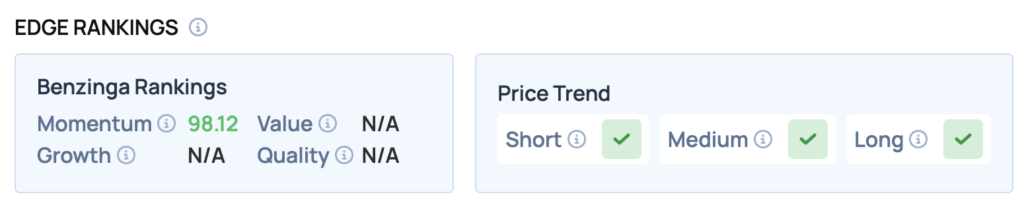 </figure>
RKLB Price Action: Rocket Lab
Read Also: China Resumes US Wheat Purchases After Trump-Xi Talks As Trade Tensions Ease: Report
How To Buy RKLB Stock
Besides going to a brokerage platform to purchase a share – or fractional share – of stock, you can also gain access to shares either by buying an exchange traded fund (ETF) that holds the stock itself, or by allocating yourself to a strategy in your 401(k) that would seek to acquire shares in a mutual fund or other instrument.
For example, in Rocket Lab’s case, it is in the Industrials sector. An ETF will likely hold shares in many liquid and large companies that help track that sector, allowing an investor to gain exposure to the trends within that segment.
Image: Shutterstock

